

Pregnancy at 15 Weeks: Weekly Calendar
Your Baby's Development at 15 Weeks

What Are My Baby’s Weight & Size at 15 Weeks?
This week, your baby weighs about 4 ounces and is about the size of an orange.
Development Milestones at 15 Weeks
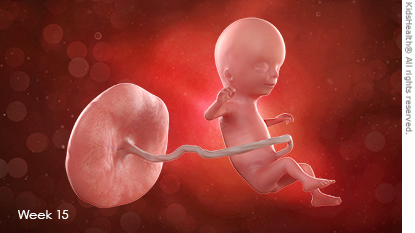
You may be wondering, what does a 15-week-old fetus look like? Your baby's skin has been continuously developing and is so thin and translucent that the blood vessels are visible through it. Hair growth continues on the eyebrows and the head. Your baby's ears are almost in position now, although they're still a bit low on the head.
Your baby's bones and muscles continue to develop. Baby is probably making lots of movements with the head, mouth, arms, wrists, hands, legs, and feet.
Your Body When You’re 15 Weeks Pregnant

Pregnancy Symptoms at 15 Weeks
At this stage, it's normal to feel like you're on an emotional roller coaster (happy one moment; sad the next). This is due to changing hormones. You may also feel scatterbrained or forgetful, and unable to concentrate. Try to keep the stress in your life to a minimum and take your "mental lapses" in stride — they're only temporary.
Some other symptoms may include:
- more interest in sex thanks to first trimester nausea and fatigue possibly going away, better blood flow, and more energy
- nosebleeds because your body has more blood flowing now (They're usually not serious, but call your doctor if the bleeding is heavy.)
- heartburn, gas, bloating, and constipation, which might get worse (Avoid foods that bother you and ask your doctor about safe medicines.)
- sensitive gums due to pregnancy hormones that can make gums swollen (Brush your teeth twice a day, floss gently daily, and make sure to get your regular dental checkups.)
Important Appointments at 15 Weeks
You should expect to see the doctor about every four weeks for regular prenatal visits. You may see your main doctor or another doctor at the practice so that you get familiar with all care team members who might care for you during delivery.
If you’re older than 35, or if your screening tests indicated a possible problem with your baby, your healthcare provider may discuss amniocentesis with you. Amniocentesis is a test usually done between 15 and 18 weeks that can detect abnormalities in a fetus, such as Down syndrome.
During this test, a very thin needle is inserted into the amniotic fluid surrounding the baby to take a sample of the fluid for analysis. Amniocentesis does carry a slight risk of miscarriage, so talk to your healthcare provider about the risks and benefits of the test.
Tips for This Week
It may be a little more difficult to breathe when you exercise or move around, since your baby is taking up more room. But staying as active as you can — and as your doctor advises — is highly recommended.
Some other suggestions:
- Continue to eat a balanced diet to help keep you and your baby healthy. Your baby does not yet need extra calories to grow, so stick to healthy snacks when you are hungry.
- Stay hydrated by drinking plenty of water and avoiding caffeinated beverages.
- Continue your exercise routine but listen to your body so you don’t push yourself too hard. Talk to your doctor if you have questions about what exercise is best.
- Get enough sleep.
- Wear comfortable clothing. Choose breathable fabrics and avoid wearing heels or tight clothing.
- Manage your stress with meditation, walks, time with loved ones, prenatal yoga, or whatever gentle activity helps you unwind.
Talk to your doctor if you have questions or concerns about your pregnancy.